

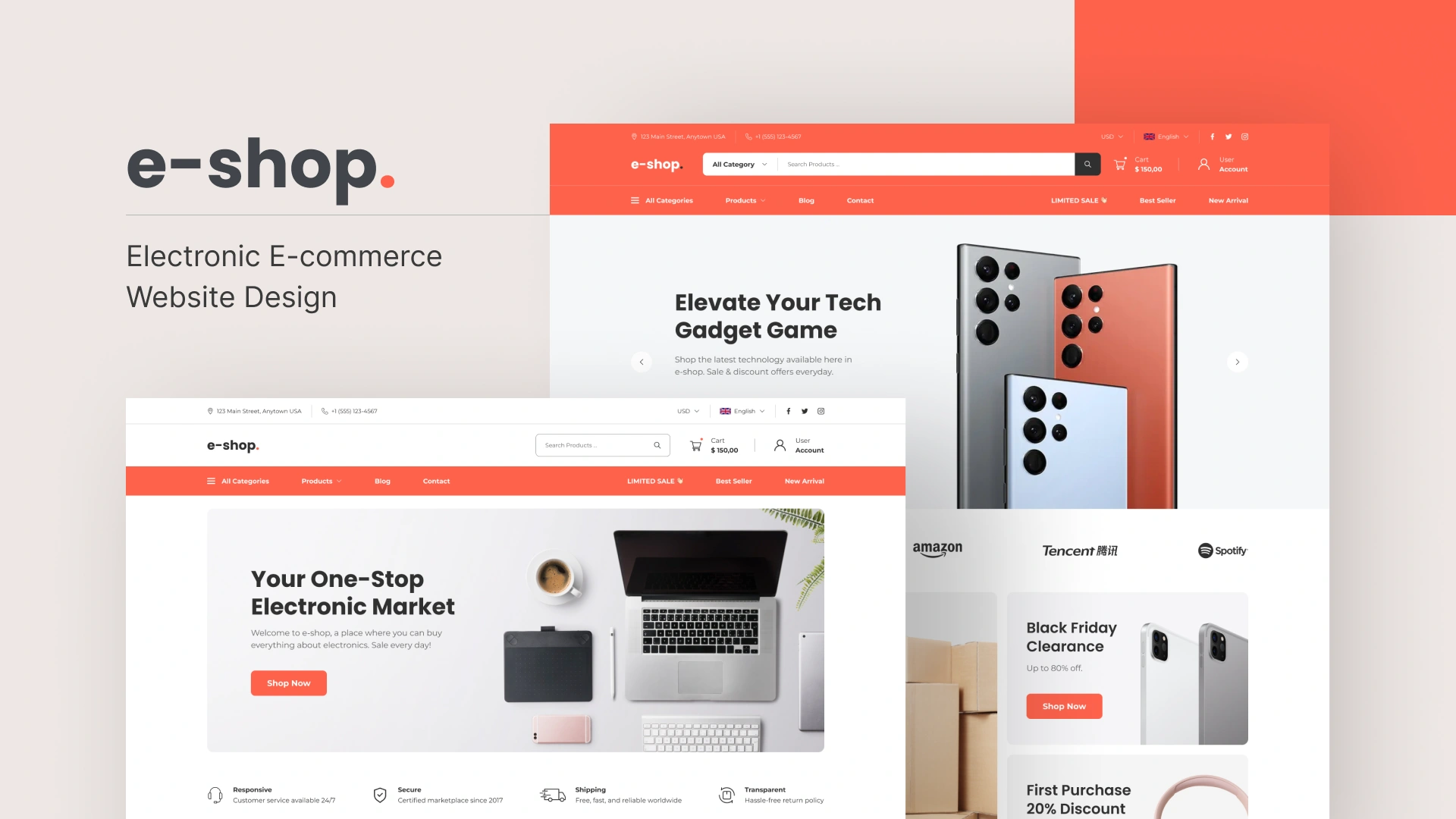
Many businesses launch e-commerce websites with high expectations but struggle to generate consistent sales. While traffic may increase, conversions often remain low due to poor design, slow performance, or unclear user journeys. This gap between visitors and buyers can limit business growth and profitability.
Building an e-commerce website that actually converts requires more than just listing products online. It involves creating a seamless experience that guides users from discovery to purchase. With the right strategy, businesses can turn their website into a powerful sales engine.
What Makes an E-Commerce Website Successful
An effective e-commerce website is designed to provide a smooth, engaging, and trustworthy shopping experience. It combines design, functionality, and performance to encourage users to take action.
This matters because customers today expect fast, intuitive, and secure online shopping experiences. If a website fails to meet these expectations, users are likely to leave without making a purchase.
Therefore, a high-converting e-commerce website focuses on user experience, trust, and simplicity.
7 Key Elements of a High-Converting E-Commerce Website
1. User-Friendly Design and Navigation
A clean and intuitive design helps users find what they need quickly. Complicated layouts can confuse visitors and increase bounce rates.
Best practices include:
- Clear menu structure
- Easy product categorization
- Simple navigation paths
This ensures a smooth browsing experience that encourages users to explore more products.
2. Mobile-Optimized Experience
A large portion of online shopping happens on mobile devices. If your website is not mobile-friendly, you risk losing potential customers.
Key benefits of mobile optimization:
- Faster loading times
- Responsive design
- Improved user experience
A mobile-optimized site increases engagement and conversions.
3. Fast Loading Speed
Website speed plays a critical role in conversions. Slow-loading pages frustrate users and lead to abandoned sessions.
To improve speed:
- Optimize images
- Use efficient hosting
- Minimize unnecessary scripts
Faster websites keep users engaged and improve sales performance.
4. High-Quality Product Pages
Product pages should provide all the information customers need to make a purchase decision.
Essential elements include:
- Clear product descriptions
- High-quality images
- Pricing and availability details
Well-designed product pages build confidence and reduce hesitation.
5. Secure and Simple Checkout Process
A complicated checkout process is one of the main reasons for cart abandonment. Simplifying this process can significantly improve conversions.
Best practices:
- Minimal steps to complete purchase
- Multiple payment options
- Secure payment gateways
A smooth checkout experience increases customer trust and sales.
6. Strong Call-to-Actions
Clear and compelling call-to-actions guide users toward making a purchase.
Examples include:
- Add to Cart
- Buy Now
- Limited Time Offer
Strategic placement of CTAs improves conversion rates.
7. Trust Signals and Social Proof
Customers need reassurance before making a purchase. Trust signals help build credibility and reduce uncertainty.
These include:
- Customer reviews
- Ratings and testimonials
- Security badges
Trust signals increase confidence and encourage users to complete transactions.
Use Cases of E-Commerce Websites
E-commerce websites are used by businesses across industries to sell products and services online.
Common use cases include:
- Retail Stores: Selling physical products directly to consumers
- Digital Products: Offering downloadable content and software
- Subscription Services: Recurring product deliveries or memberships
- B2B Platforms: Wholesale and bulk purchasing solutions
- Marketplaces: Connecting buyers and sellers on a single platform
These examples highlight the versatility of e-commerce in different business models.
Why Businesses Need a High-Converting E-Commerce Website
Businesses that fail to optimize their e-commerce websites often miss out on potential revenue. High traffic without conversions leads to wasted marketing efforts and lower returns on investment.
A well-designed e-commerce website helps businesses convert visitors into customers efficiently. It improves user experience, builds trust, and supports scalable growth.
Additionally, companies with optimized e-commerce platforms gain a competitive advantage. They can attract more customers, increase sales, and strengthen their online presence.
Conclusion
Building an e-commerce website that actually converts requires a strategic approach focused on user experience, performance, and trust. By optimizing design, speed, and functionality, businesses can turn their website into a powerful revenue-generating platform.
Organizations that invest in high-converting e-commerce solutions can achieve better results, improve customer satisfaction, and scale their operations effectively. As online shopping continues to grow, having a strong e-commerce website is essential for long-term success.
If your business wants to increase conversions and maximize online sales, building a well-optimized e-commerce website is the key to achieving sustainable growth.